Credit Impulse and Semi CapEx: The 6-Month Lead
2026-10-22

The rapid expansion of artificial intelligence infrastructure has transformed capital expenditure into one of the most important macro-financial stories in the technology sector. Hyperscale cloud providers and large technology companies are committing enormous amounts of capital to data centers, accelerators, networking equipment, power infrastructure, cooling systems, and advanced storage. While much of this investment is supported by strong operating cash flow, the scale and speed of AI infrastructure spending have increasingly brought debt financing and interest-rate sensitivity into the discussion.
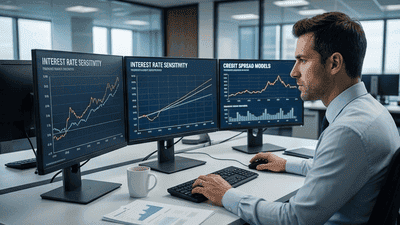
The central question is not simply whether higher interest rates make AI infrastructure more expensive. It is whether changes in the cost of capital can materially alter the pace, composition, or economic return of hyperscale spending. AI demand may be strong enough to support continued investment even in a higher-rate environment, but financing costs still influence project economics, corporate leverage, equipment purchasing decisions, and ultimately the semiconductor supply chain.
This creates a new macro linkage between monetary conditions and the semiconductor cycle. Interest rates do not necessarily determine whether hyperscalers build AI infrastructure. Instead, they influence how quickly companies can expand, how projects are financed, and what level of future revenue is required to justify the investment.
Traditional technology capital expenditure often followed relatively predictable cycles. Companies expanded computing capacity when demand increased, adjusted investment when utilization weakened, and gradually replaced aging infrastructure. AI infrastructure has introduced a different dynamic because computing requirements can grow rapidly while existing systems become obsolete surprisingly quickly.
Training and serving large AI models require enormous amounts of computing power, memory bandwidth, networking capacity, and electricity. A new generation of accelerators can create demand for an entire supporting ecosystem rather than simply replacing one piece of equipment. Data centers may need upgraded power delivery, liquid cooling, high-speed networking, storage, and specialized infrastructure at the same time.
As a result, hyperscalers face a capital cycle in which investment decisions are increasingly linked to expectations about future AI workloads. Debt financing can become part of that equation because the optimal investment schedule may require spending before the associated revenue has fully materialized.
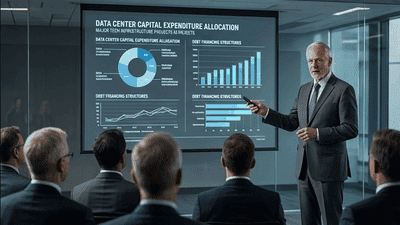
The most direct connection between rates and AI capex is the cost of borrowed capital. When interest rates rise, newly issued debt generally becomes more expensive. The effect is particularly relevant when companies finance large infrastructure projects through bonds or other long-term borrowing instruments.
A project that appears economically attractive at a low financing cost may have a lower expected return when the cost of debt increases. The difference does not necessarily stop construction, especially for companies with strong balance sheets, but it can influence the pace of investment and the threshold for approving marginal projects.
For hyperscalers, however, interest expense is only one part of the equation. The more important issue may be the weighted average cost of capital. Debt represents only one financing source, while retained earnings and equity-market valuations also contribute to the overall cost of funding. Changes in Treasury yields can therefore affect both the borrowing cost and the valuation framework used to assess future projects.
The 10-year U.S. Treasury yield is particularly important because large technology companies frequently issue long-dated debt. Corporate bond yields are influenced by Treasury yields plus a credit spread that compensates investors for corporate risk.
When the 10-year yield rises, even a company with an unchanged credit spread can face higher borrowing costs. If credit spreads widen at the same time, the increase in financing costs can be considerably larger.
This creates two distinct macro environments. In the first, Treasury yields rise because economic growth is strong while credit markets remain stable. Hyperscalers may absorb the higher cost because strong AI demand improves revenue expectations. In the second, Treasury yields rise while credit spreads widen and technology demand expectations weaken. In that environment, the financial pressure becomes much more significant.
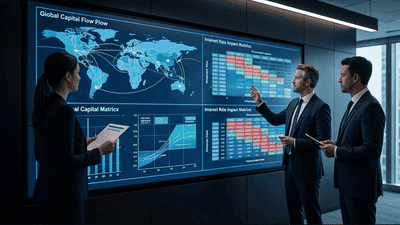
It is important not to interpret debt-funded AI investment as evidence of financial weakness. Large technology companies may use debt strategically even when they have substantial cash reserves. Debt can preserve liquidity, optimize the corporate capital structure, or provide flexibility while companies continue investing heavily in multiple areas at once.
The key issue is the relationship between financing costs and expected cash generation. A company with recurring cloud revenue and strong operating margins may be able to service additional debt comfortably. A smaller technology infrastructure provider with less predictable revenue may experience a much stronger sensitivity to changes in interest rates.
This difference matters throughout the AI supply chain. Hyperscalers sit at one end, while data-center developers, power providers, equipment suppliers, networking companies, and semiconductor manufacturers occupy other positions. A change in financing conditions can affect each group differently.
One reason AI infrastructure is sensitive to rates is that the investment horizon can be long. A data center may require substantial upfront spending before it reaches full utilization. Power connections, cooling systems, buildings, networking infrastructure, and semiconductor equipment can involve multi-year planning and deployment schedules.
This means that the economic value of an AI infrastructure project depends on cash flows generated over an extended period. Higher discount rates reduce the present value of those future cash flows. Even if the underlying technology demand remains strong, the financial attractiveness of long-duration projects can change.
The duration effect is particularly important when a company is expanding aggressively on the assumption that AI workloads will continue growing for many years. The higher the financing and discount rate, the greater the amount of future revenue needed to justify the initial investment.
Rate sensitivity also depends on when the debt was issued. Companies that locked in low borrowing costs through long-term fixed-rate bonds may have relatively limited immediate exposure to higher policy rates. Their existing interest expense may remain stable even as market yields rise.
The pressure appears more clearly when debt needs to be refinanced or when companies issue new bonds to fund additional infrastructure. This creates a lag between changes in market rates and the actual impact on corporate interest expense.
For this reason, the AI capex cycle can remain surprisingly strong during the early stages of a tightening financial environment. Companies may still have substantial liquidity, existing financing commitments, and previously approved projects. The full effect of higher borrowing costs may emerge only when the next wave of financing decisions arrives.
Corporate credit spreads provide another important layer. A hyperscaler with a strong balance sheet may maintain a relatively narrow spread over Treasuries, while a weaker infrastructure company may pay a much larger premium.
When credit markets are calm, higher Treasury yields may be manageable because the spread remains stable. When investors become concerned about leverage or future cash flows, spreads can widen quickly. The resulting increase in all-in borrowing costs can make debt-financed expansion considerably more expensive.
This is why monitoring Treasury yields alone can produce an incomplete picture of AI capex financing conditions. The combination of risk-free rates and corporate spreads provides a much better indication of the actual cost of debt.
AI data centers are not simply collections of servers. They are increasingly large power-consuming facilities requiring new transmission capacity, substations, backup systems, cooling infrastructure, and sometimes dedicated energy arrangements.
Power infrastructure can introduce an additional financing layer because these projects may require substantial upfront investment before data-center revenue is fully realized. Higher rates can therefore affect not only the hyperscaler itself but also utilities, infrastructure developers, and financing partners involved in expanding the power ecosystem.
This creates a broader capital cycle. Semiconductor demand leads to accelerator purchases, accelerator deployment leads to data-center expansion, data-center expansion increases power requirements, and power investment creates another round of infrastructure spending. Interest rates can influence every link in that chain.
For semiconductor manufacturers, the most important variable is not necessarily the interest rate itself. It is the investment behavior of their customers.
If hyperscalers continue increasing AI infrastructure budgets, demand for GPUs, custom accelerators, high-bandwidth memory, networking chips, advanced packaging, and power-management components can remain strong. If financing constraints cause hyperscalers to slow the pace of new data-center construction, the impact may eventually appear in semiconductor order growth.
The transmission is rarely immediate. Semiconductor suppliers may operate with long lead times and substantial existing backlogs. Customers may also prioritize critical AI components even while reducing spending elsewhere. Consequently, a change in financing conditions can take several quarters to become visible in semiconductor revenue.
The strongest defense against higher financing costs is improving economic productivity. If AI infrastructure generates enough incremental revenue or cost savings, hyperscalers may continue investing despite a higher cost of capital.
Cloud providers can monetize AI through model services, computing capacity, enterprise applications, software subscriptions, and specialized infrastructure. The more successfully these revenue streams develop, the less damaging a moderate increase in financing costs becomes.
This creates an important feedback loop. Strong AI monetization supports higher capital expenditure. Higher capital expenditure expands computing capacity. Expanded capacity supports additional AI services and workloads. Those workloads generate further revenue that can help finance the next investment cycle.
The danger emerges if capital expenditure accelerates much faster than monetization. In that situation, higher interest rates become more consequential because companies must fund increasingly large investments while waiting longer for sufficient returns.
Debt is only one part of the financing equation. Equity-market valuations can also affect hyperscale investment decisions because they influence the opportunity cost of capital and the overall corporate financing environment.
When technology valuations are high and investor confidence is strong, companies may have greater flexibility to raise equity-linked capital or use highly valued shares in strategic transactions. When valuations decline, debt may become relatively more important, potentially increasing balance-sheet sensitivity.
At the same time, a decline in technology valuations can influence management behavior even without new financing. Executives may become more cautious about projects whose returns depend on distant future growth. The market's willingness to reward aggressive spending can therefore influence capital allocation alongside the actual cost of debt.
AI infrastructure is a global supply chain, which means currency movements can influence project economics as well. A stronger U.S. dollar can affect the cost of imported equipment and components for companies operating outside the United States, while also changing the purchasing power of overseas customers.
Because much of the semiconductor ecosystem operates across Asia, exchange rates can interact with U.S. interest rates in meaningful ways. Higher Treasury yields can support the dollar, while a stronger dollar can affect equipment costs, supplier margins, and international technology demand.
For multinational hyperscalers, currency exposure can therefore partially offset or amplify the effect of interest-rate changes. The final economic outcome depends on where revenue is generated, where infrastructure is built, and which currencies are used to purchase equipment and services.
Commodity markets also matter. Data-center construction requires steel, copper, aluminum, energy, construction materials, and specialized electrical equipment. Semiconductor manufacturing adds another layer of demand for chemicals, gases, metals, and industrial inputs.
If commodity prices rise at the same time that financing costs increase, the total cost of building AI infrastructure can climb rapidly. A project may then face pressure from both sides of the financial model: higher interest expense and higher physical construction costs.
Conversely, stable or declining commodity prices can partially offset higher rates. This illustrates why the macro environment surrounding AI capex cannot be reduced to a single interest-rate variable.
A slowdown caused by higher rates would not necessarily appear as an abrupt collapse in spending. It could emerge through smaller changes: longer project approval cycles, delayed data-center construction, revised equipment delivery schedules, greater scrutiny of expected utilization, or a shift toward projects with the fastest expected monetization.
Hyperscalers might continue spending aggressively on high-priority AI clusters while reducing investment in less urgent infrastructure. This would create a more selective capex cycle rather than a broad-based contraction.
For semiconductor suppliers, the distinction would be important. Demand for leading AI accelerators and high-bandwidth memory could remain resilient even if broader server or networking investment slowed. The impact of tighter financial conditions may therefore be uneven across semiconductor categories.
A useful monitoring framework combines several indicators. The 10-year Treasury yield provides the baseline cost of long-duration capital. Corporate bond spreads indicate how much additional compensation credit investors demand. New technology-sector debt issuance reveals whether companies are actively accessing capital markets and at what cost.
Alongside those indicators, investors can watch hyperscaler capital expenditure guidance, data-center construction activity, cloud utilization, AI service revenue, equipment orders, and semiconductor supplier commentary. The relationship between spending and monetization is especially important.
If capex continues rising while AI revenue accelerates, higher rates may have limited practical impact. If capex continues rising while monetization slows and credit spreads widen, the financial risk becomes more visible. The divergence between spending growth and revenue growth can therefore be more informative than the interest-rate level alone.
Interest-rate changes typically pass through the AI infrastructure ecosystem with a delay. Existing financing arrangements, construction commitments, and equipment orders can keep spending elevated for several quarters after financial conditions begin tightening.
A six-to-twelve-month window can therefore be useful when assessing the potential impact of a meaningful change in borrowing costs. During this period, companies may refinance debt, negotiate new equipment contracts, update project economics, and revise capital-allocation plans.
The timing will vary by company and project. Large strategic AI deployments may remain protected from short-term financial changes, while marginal projects can be postponed much sooner. The overall result is likely to be a gradual change in the composition and efficiency of spending rather than an immediate reversal.
AI infrastructure has created a capital cycle large enough to become an important macroeconomic variable in its own right. Hyperscalers can finance expansion through operating cash flow, existing liquidity, and debt markets, but the cost of capital still matters. Higher Treasury yields raise the baseline cost of long-term funding, while wider credit spreads can amplify the effect.
The most important issue is not whether interest rates can stop AI investment. It is whether higher financing costs change the economics of the next unit of investment. Projects with strong expected utilization and rapid AI monetization may continue to receive capital, while lower-return or more speculative infrastructure may face greater scrutiny.
For semiconductor markets, the transmission will occur through customer spending. Sustained hyperscale investment supports demand for accelerators, HBM, networking, advanced packaging, power-management technology, and related infrastructure. A financing-driven slowdown would eventually work backward through those supply chains, although the timing could be delayed by existing orders and strategic priorities.
The broader macro picture therefore matters. Interest rates influence debt costs, credit conditions influence financing availability, exchange rates affect global equipment economics, and commodity prices influence the physical cost of building capacity. AI capex sits at the intersection of all four.
The rate sensitivity of hyperscale spending is ultimately a question of returns. As long as expected AI revenue and productivity gains rise quickly enough to compensate for higher financing costs, capital expenditure can remain resilient. If the cost of capital rises faster than the economic value created by new infrastructure, the market will eventually demand greater discipline. That tension between technological opportunity and financial cost will remain one of the defining macro linkages of the AI and semiconductor investment cycle.